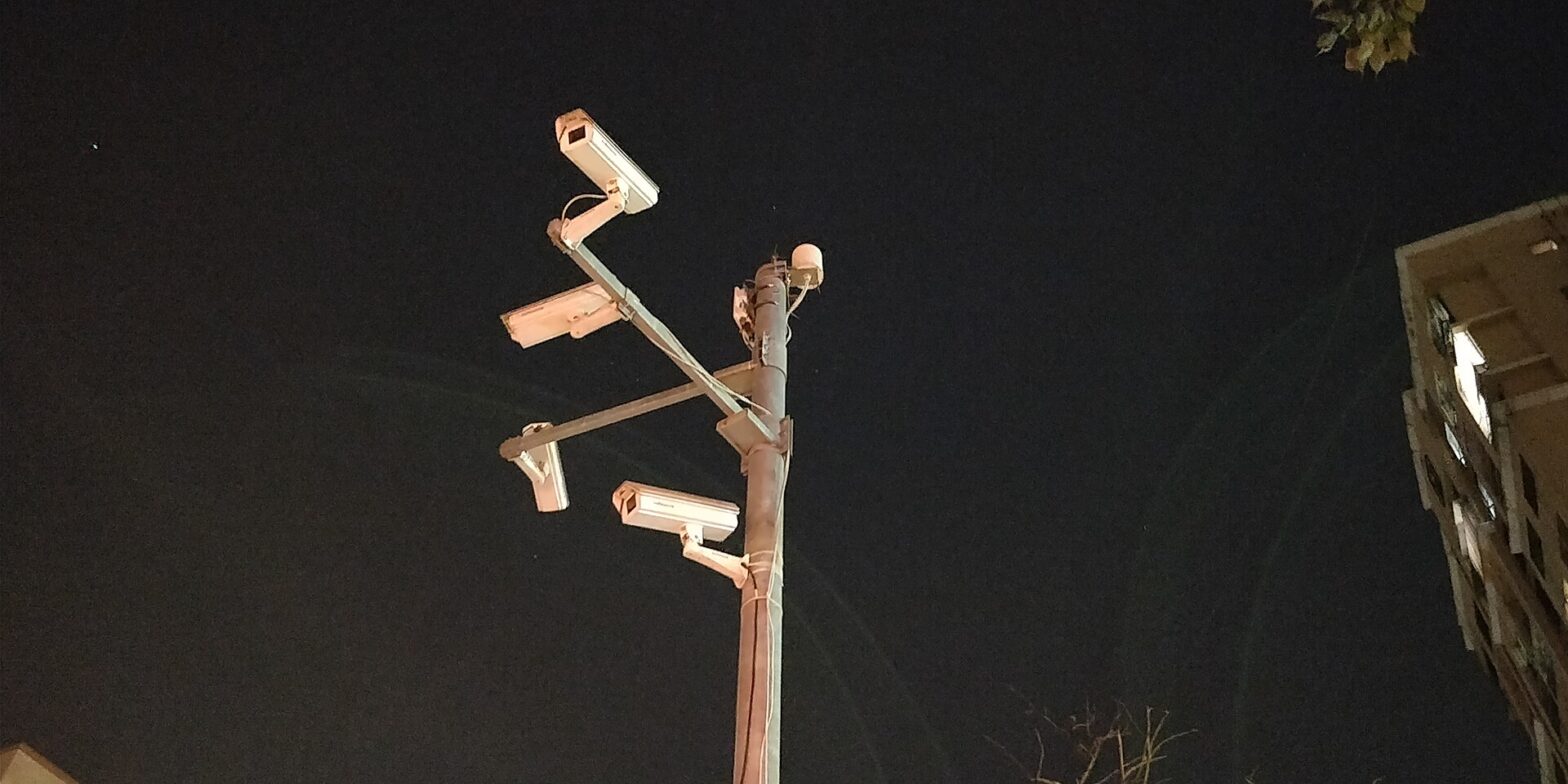

On 22 May 2026, a three-judge Bench of the Supreme Court in Pune Bar Association v Union of India rejected a constitutional challenge to hash disclosure and expert certification under Section 63(4) of the Bharatiya Sakshya Adhiniyam, 2023. Those requirements serve a legitimate purpose. A certificate establishes that the image tendered in court is the image the examiner produced.
It does not establish that it was the only image the examiner produced. An expert processing a blurred registration plate through different settings may obtain an ‘8’ from one run, a ‘3’ from another and nothing legible from a third. The report carries the sharpest version. Its recorded hash matches the file produced in court. The defence receives a certified image without ever learning that the examination generated a competing identification. Preserving the selected file has not preserved the uncertainty that matters.
The gap is not authenticity. It is selection and Part B of the very certificate that closes the authenticity gap is signed, in the ordinary case, by the expert who made the selection. Courts should require preservation of materially divergent outputs actually generated during such an examination, an inventory identifying them, and recorded reasons for the choice. A sharper image should not make a weaker inference look certain.
Certification leaves the selection unexamined
A hash comparison helps establish whether a file matches a trustworthy reference. It cannot establish that the depicted registration character is accurate. NIST’s digital-evidence preservation guidance identifies alteration before hashing as a risk and recommends hashing early and storing reference values securely. Hashing protects the comparison. It says nothing about what happened before the reference was created.
Part B of the Section 63(4) certificate supplies expert certification, but it is not necessarily an independent audit of the selection. Where the certifying expert also selected the processed image, certification leaves that person’s choice untested. The statute does not require the roles to coincide. Yet appointing a different certifier does not itself disclose the selection process: that expert also needs the examination history to evaluate how the relied-upon version was chosen.
This is not an allegation of misconduct. An examiner can have sound reasons for rejecting an output produced with unsuitable settings. The problem arises when the report communicates the selected result without exposing those reasons to scrutiny. A valid explanation strengthens the evidence precisely because another expert can test it.
Why generative processing changes the stakes
Generative upscaling can synthesise plausible detail rather than reliably recover the detail originally recorded. The authors of the SRGAN paper presented at CVPR 2017 warned that approaches which hallucinate finer detail might be less suited for medical applications or surveillance. A visually convincing reconstruction is therefore not evidence that the reconstructed feature existed at the scene. Plausibility is a property of the output; accuracy concerns its relationship to the event. A Washington court reached the practical consequence in State v Puloka, excluding video processed through a commercial AI tool because the methods were opaque and proprietary and had added information absent from the original files. That is not Indian authority. It indicates what the technology eventually forces a court to decide.
Nor would disclosure alone validate a reconstructed character. Different runs can repeat the same error, particularly where they share a model and its assumptions, and agreement between those outputs is not independent corroboration. An examiner still has to justify the method’s suitability for the source footage and the identifying feature. The proposed history exposes the selection process; it does not turn an unsuitable reconstruction into reliable identification evidence.
The distinction should not harden into an absolute divide between harmless conventional processing and dangerous AI. Conventional sharpening can also introduce misleading artifacts. The SWGDE Image Processing Guidelines of 8 February 2016 recommend preserving originals and documenting processing, and warn about misleading additions and lost detail. The questions that matter are what the method does, how it was validated, and whether the inference survives comparison with the source and the material alternatives.
India has a concrete institutional reason to address this now. Section 176(3) of the Bharatiya Nagarik Suraksha Sanhita, 2023 provides for forensic-expert visits and videography in investigations of offences punishable by seven years or more, from dates notified by State Governments within the statutory five-year period. This strengthens the place of forensic collection and visual records in criminal procedure. It does not mandate AI enhancement or prove its prevalence in laboratories. But as the framework is implemented, examination records deserve attention alongside collection records.
Section 45 reaches beyond the final opinion
The legal foundation already exists. Under the BSA’s expert-opinion provisions, Section 39 addresses relevant expert opinions, Section 40 recognises facts supporting or inconsistent with them, and Section 45 makes the grounds of a relevant opinion relevant. Its illustration is direct: an expert may give an account of experiments performed by him for the purpose of forming his opinion.
The illustration supports examining the work through which an opinion was formed. It does not say that every experiment must automatically be disclosed. But a materially inconsistent processing run bears on the grounds of an identification, especially where the conclusion depends on selecting one result over another. What is missing is a reliable route to preserve, identify and inspect that material.
In Manoj v State of Madhya Pradesh, decided on 20 May 2022, paragraph 179 requires the prosecution to furnish a list of statements, documents, material objects and exhibits not relied upon by the investigating officer, with trial courts ensuring compliance. An investigator’s decision not to rely on material should not make its existence invisible. Manoj did not establish an obligation to retain intermediate software outputs. It supplies the disclosure foundation on which a specific preservation protocol can build.
A workable direction for trial courts
High Courts should use their supervisory and procedural rule-making powers under Article 227 to frame directions for subordinate criminal courts governing how parties identify and produce examination histories when relying on processed imagery. Forensic laboratories can support compliance through retention manuals. Courtroom procedure and laboratory workflow must connect, without treating a laboratory manual as a substitute for a judicial disclosure remedy.
The preservation threshold should be a difference capable of affecting the proposition for which the image is offered. A competing registration character qualifies; so may an output that renders that character indeterminate. Routine failed exports and changes unrelated to the disputed feature need not trigger retention. The rule should cover results actually generated during the examination, not require the creation of every conceivable output. The examiner should retain the source, the selected derivative and the material alternatives, with an inventory identifying the software version, settings and processing sequence, and the report should record the selection criterion. Preferring a result because it resembles the suspect’s vehicle is different from preferring it because a validated method consistently recovers a feature, and the court needs enough to tell those explanations apart.
Materiality decisions should themselves be reviewable. A brief examination log should identify processing attempts and record why outputs were classified as immaterial. Otherwise the safeguard would simply relocate the unexamined choice from selecting the final image to selecting the history disclosed. Retention disputes could then be resolved against a contemporaneous record rather than an examiner’s later recollection.
An inventory need not entail unrestricted circulation of the archive. The defence should be able to seek access to identified material through the trial court, and controlled inspection or redaction can protect unrelated personal information. Any restriction should preserve a meaningful opportunity to test the feature relied upon and the method that produced it.
For earlier examinations, missing outputs require a reasoned response. Courts should establish what survives, why material was not retained and whether independent examination remains possible. A fresh processing run must be identified as a later examination, not presented as recovery of an unrecorded earlier result. Remedies should address the actual prejudice through production, further examination or questioning; where meaningful testing is impossible, the court must explain the resulting limits on reliance.
The same methodological candour should govern expert imagery tendered by the defence, without equating the parties’ disclosure duties or weakening the prosecution’s burden of proof. Prospective directions would give laboratories a clear retention standard and courts a practical basis for resolving access disputes. Courts need to know whether the image before them survived a reasoned examination or merely emerged as the most persuasive-looking version.
How to cite this post
Bin Mohd, S.A. (2026) ‘AI-enhanced CCTV evidence and the duty to disclose rejected versions’, Sheikh Abbas Bin Mohd, 23 October 2026. Available at: https://abbasbinmohd.com/ai-enhanced-cctv-evidence-rejected-versions/